Agility in Acquisition: How Reverse 1031 Exchanges Secure the Perfect Deal
A reverse 1031 exchange lets you buy replacement property first while deferring capital gains tax—but the structure must exist before you close on the new asset.
Powered by Securitas
Pacific1031 demystifies the 1031 exchange — explaining how it works, highlighting key benefits, and showing you how to grow your portfolio while keeping more of your capital working for you.
Deferring capital gains taxes allows investors to reinvest more capital into higher-value properties.
Exchange into properties with higher rental income to enhance your monthly cash flow.
Utilize the full sales proceeds to acquire more valuable or additional real estate assets.
Trade properties in different markets or sectors to reduce risk and increase opportunity.
Reinvest into new properties without losing capital to unnecessary tax obligations.
Properties passed to heirs may receive a step-up in basis, preserving wealth for future generations.
Our spotlight of the wide range of people and entities using this powerful tax strategy to build wealth.

A reverse 1031 exchange lets you buy replacement property first while deferring capital gains tax—but the structure must exist before you close on the new asset.

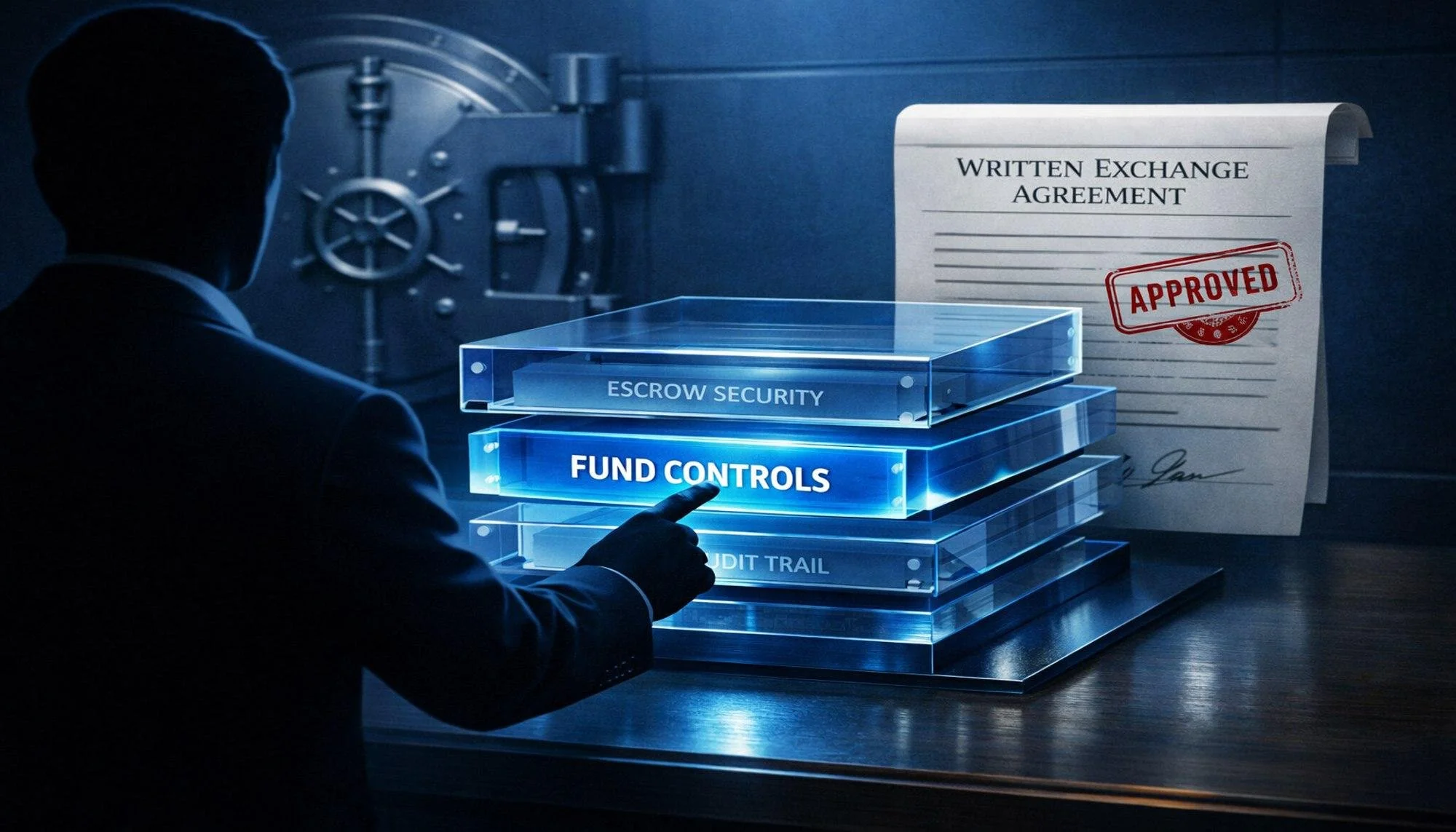
Budget QI selection can cost up to 40% of your property gains in taxes. Use this 10-question checklist to vet fund controls before your exchange closes.

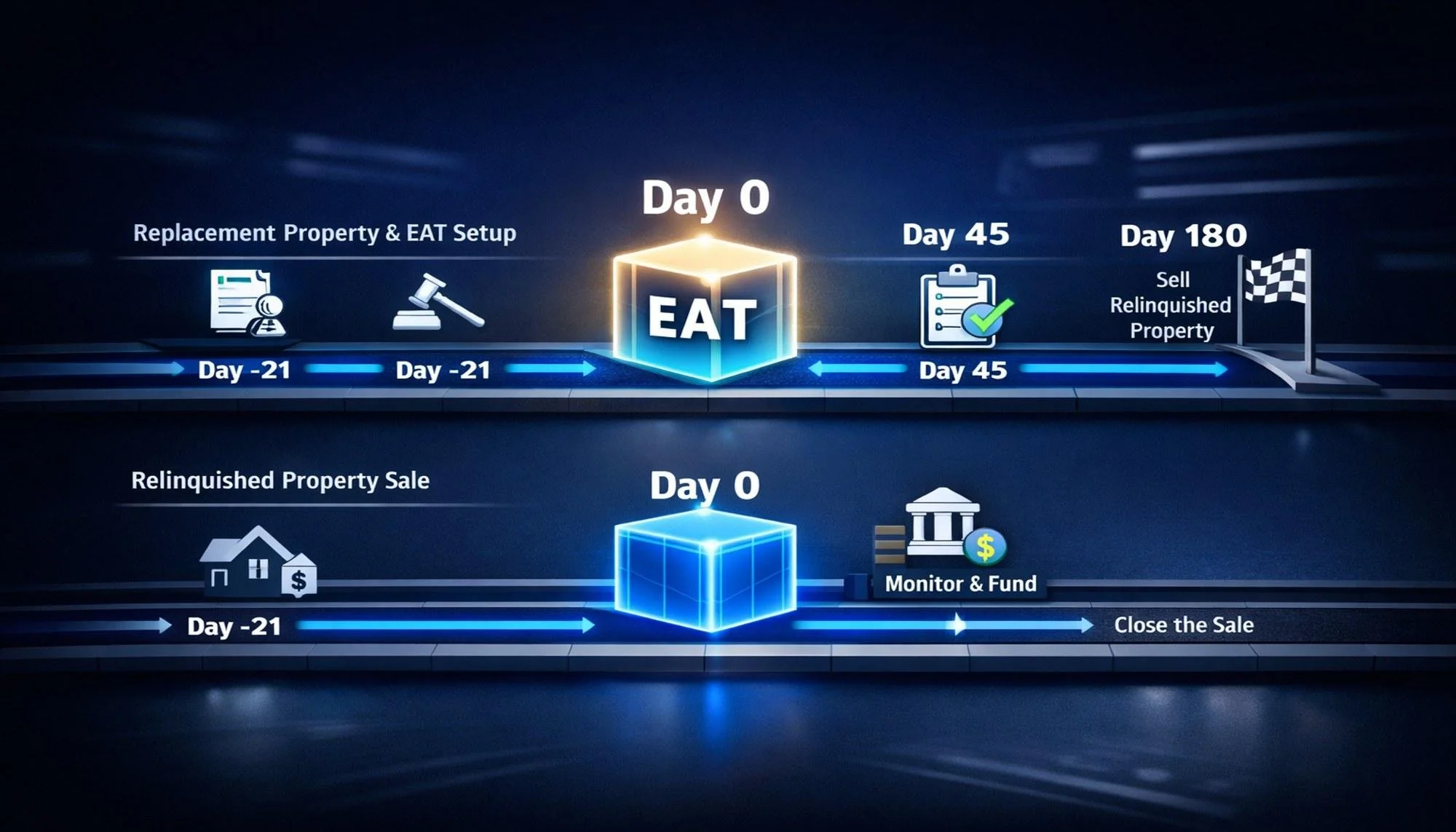
Reverse 1031 exchanges flip the order: buy first, sell later. Your EAT must hold title before closing, with Day 45 and Day 180 deadlines that never extend.

Buy replacement property before your sale closes using a reverse 1031 exchange. The EAT takes title first—engage your QI before signing the purchase contract.

Miss the 45-day identification deadline by one day and your 1031 exchange fails completely. Follow this Day 0 to Day 45 checklist to protect your deferral.

The 45-day and 180-day 1031 deadlines are federal, but California's unique rules and fast-moving markets require early QI setup to avoid constructive receipt.
Title company affiliate QIs may prioritize closing speed over fund controls. Verify segregated accounts and wire authorization before signing to avoid constructive receipt.